
Why Does Sciatica Cause Pain Down the Leg?
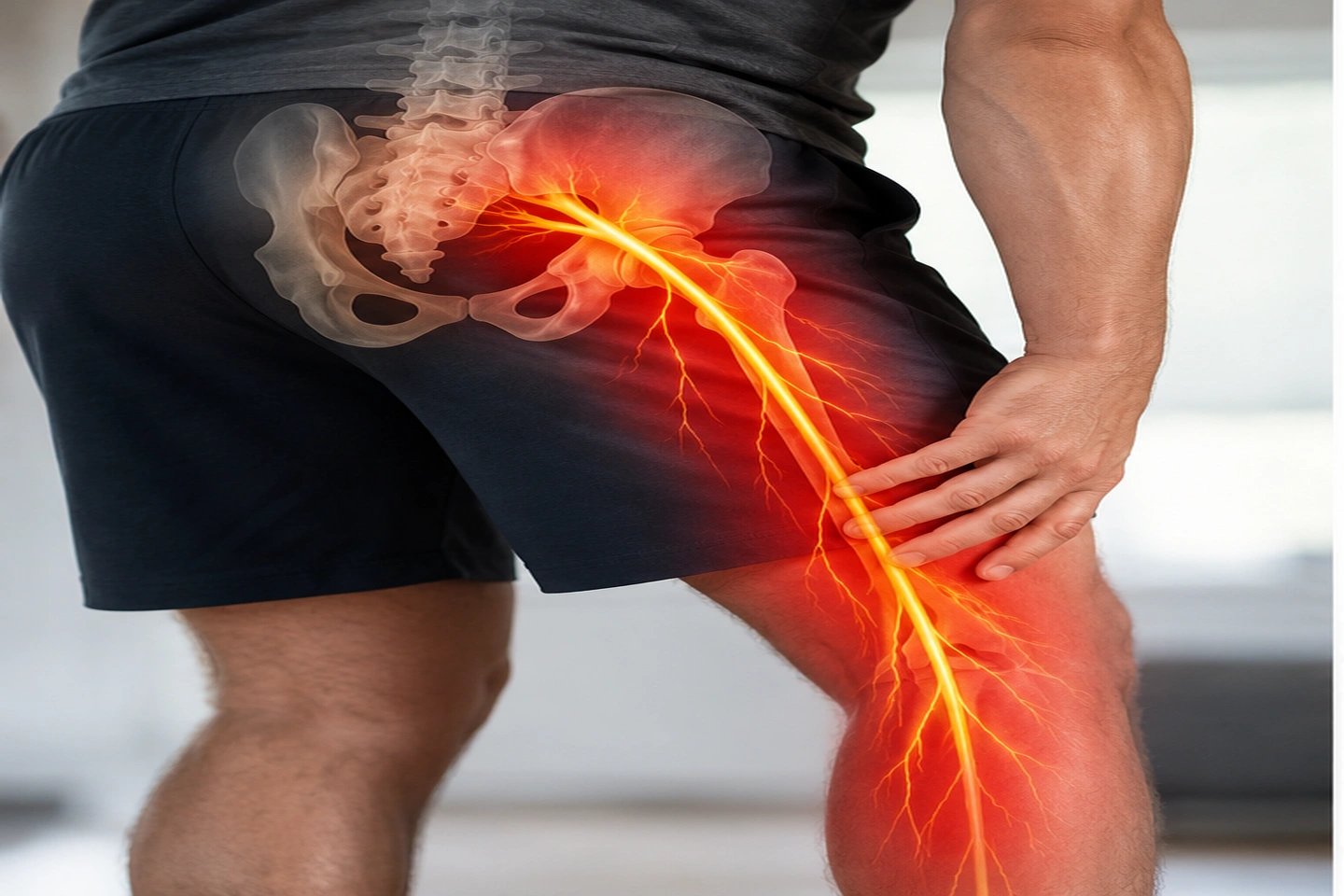
Dave was halfway through tying his shoelace when it happened. A sharp jolt shot from his lower back, over his buttock, and straight down the back of his thigh, all the way to his calf. He stood up slowly, confused. He hadn't hurt his leg. Hadn't twisted his ankle either. So why did it feel like the trouble was sitting near his knee, when the actual problem seemed to be in his back?
This is one of the most common questions we hear at Isleworth Pain and Injury Clinic. Sciatica has a strange habit of showing up far from where it actually starts. Understanding why can make the whole thing feel a lot less alarming.
The Sciatic Nerve Is a Very Long Road
To understand why sciatica travels, picture the sciatic nerve itself. It's the longest and thickest nerve in the body, built from a bundle of nerve roots that exit the lower spine, join together, and run down through the buttock, along the back of the thigh, then branch out below the knee into the calf and foot.
Because this nerve is one long, continuous pathway, irritation or compression at its starting point in the lower back can send signals all the way down. Think of it like pinching a hosepipe near the tap and still seeing the water flow affected further along the line. The pinch happens at one end. The disruption shows up along the whole route.
Where the Trouble Usually Starts
Sciatica isn't really a condition on its own, it's a symptom. Usually it's caused by something pressing on or irritating one of the nerve roots in the lower back. This might be:
- A bulging or herniated disc pressing against the nerve root.
- Degenerative changes in the spine that narrow the space around the nerve.
- Muscle tightness, particularly in the piriformis muscle deep in the buttock, which can irritate the sciatic nerve as it passes nearby.
- Joint changes or inflammation in the lower spine affecting nearby nerve tissue.
Whatever the specific cause, the pattern tends to look similar. Something's affecting the nerve root near the spine, but the pain, numbness, or tingling turns up much further away.
Why the Pain Travels Rather Than Stays Put
Nerves carry sensory information from the body back to the brain. When a nerve root gets compressed or inflamed, it doesn't just cause pain right at that spot. It can send confusing, exaggerated signals along the whole nerve pathway it supplies. The brain reads these signals as coming from wherever that nerve normally provides sensation, which for the sciatic nerve means the buttock, thigh, calf, and sometimes the foot.
- This is why someone with sciatica might feel:
- A deep ache in the buttock.
- A burning or shooting sensation down the back of the thigh.
- Numbness or pins and needles in the calf or foot.
- Weakness when trying to lift the foot or stand on tiptoes.
The location of the referred pain can even hint at which nerve root is affected, since different roots feed slightly different parts of the leg. Someone whose pain stops at the knee may have a different level of irritation than someone whose symptoms reach all the way to the little toe.
Not Everyone Feels It the Same Way
Sciatica doesn't look identical from person to person. Some people get a constant dull ache. Others get sudden, sharp jolts triggered by movement, coughing, or sitting too long. Some notice their leg feels heavy or weak rather than painful. This variation happens because the degree of nerve irritation, the specific nerve root involved, and each person's own pain sensitivity (which varies more than people realise) all play a part.
Why Sitting, Bending, or Coughing Can Make It Worse
Plenty of people with sciatica notice their symptoms flare with certain movements. Sitting for a long stretch, bending forward, even sneezing, can raise pressure within the spine and around the nerve root, which intensifies the referred pain down the leg. Sound familiar? It's a useful clue for anyone trying to work out what's going on with their own symptoms, and it's something we often ask about during an assessment at our clinic in Isleworth. It helps build a clearer picture of what's actually driving the irritation.
Why Understanding the Cause Matters for Treatment
Because sciatica is a referred pain pattern rather than a problem starting in the leg itself, treating the leg alone rarely fixes it. The focus needs to stay on what's happening at the nerve root in the lower back.
At Isleworth Pain and Injury Clinic, our approach usually starts with a thorough assessment, looking at movement patterns, posture, and the specific nature of the nerve irritation. From there, treatment might include manual therapy to ease pressure on the affected area, targeted exercises to support the spine and improve mobility, and guidance on movements or positions to avoid while things settle. Everyone's presentation is a little different. Care gets built around the person in front of us, not a fixed routine we run for everyone.
Worth saying too: sciatica often improves with consistent, appropriate management, though timeframes vary from person to person depending on the underlying cause and how long symptoms have hung around.
Ready to Get Started?
If you're dealing with pain that travels down your leg and you're not quite sure why, a clear assessment can make a real difference. Our team at Isleworth Pain and Injury Clinic works with people across Isleworth and the surrounding area to get to the root of nerve related pain, rather than just chasing where it's felt. If sciatica is affecting your daily life, get in touch to arrange an assessment and take the first proper step toward understanding your symptoms.
FAQs
Can sciatica cause pain without any back pain at all?
Yes, and it's more common than people think. Some people feel little to no discomfort in the lower back itself but get significant pain, numbness, or tingling down the leg. That happens because the referred symptoms can be far more noticeable than the irritation at the nerve root itself.
Is sciatica always caused by a slipped disc?
No. Disc issues are a frequent cause, but sciatica can also come from muscle tightness, joint changes in the spine, or other factors irritating the nerve root. A proper assessment helps pin down the actual cause in each case.
How long does sciatica typically last?
This varies a lot depending on the cause and how it's managed. Some people notice improvement within a few weeks with the right care. Others, with more stubborn nerve irritation, take longer. Sticking with treatment and adjusting activity tends to support better outcomes.
Should I rest completely if I have sciatica?
Complete bed rest isn't usually the answer. Gentle movement and specific exercises often support recovery better than lying still for long periods. That said, anything that clearly worsens symptoms should be avoided until you've been assessed.
When should I seek help for leg pain linked to sciatica?
If the pain is persistent, getting worse, or comes with numbness, weakness, or changes in bladder or bowel function, get it assessed promptly. Even without those signs, ongoing leg pain that's affecting your daily life is worth having looked at properly.
Schedule Your Visit!
Don’t wait to feel better. Book your consultation now and let us help you move freely and live pain free.


Phone: +44 20 3137 7198




© Remedo 2026 | All rights reserved | Privacy Policy | Website Design by Remedo